
🥞 Introduction
There’s something universally comforting about pancakes—their golden edges, pillowy centers, and the way they soak up syrup like a warm hug on a plate. Whether you’re waking up to a slow Sunday morning or preparing a cheerful brunch for loved ones, pancakes offer a timeless joy that transcends age, culture, and occasion. This recipe for Fluffy & Golden Best Pancakes is more than just a set of instructions—it’s a celebration of simplicity, warmth, and the kind of indulgence that feels like home.
Crafted with everyday ingredients and perfected through countless trials, this pancake recipe delivers consistent results: light, airy interiors with a golden crust that whispers of butter and vanilla. It’s designed for both beginners and seasoned home cooks, offering flexibility without compromising on flavor or texture. From the first whisk to the final flip, every step is infused with intention, ensuring that your pancakes rise to their fullest potential—literally and figuratively.
In this post, we’ll explore the rich history of pancakes, their cultural significance across continents, and the science behind their fluffiness. We’ll walk through ingredient quantities, optional additions, and expert tips that elevate your breakfast game. By the end, you’ll not only master the art of pancake-making but also embrace a philosophy of healthful indulgence that nourishes both body and soul.
🌍 Origin and Cultural Significance
Pancakes are among the oldest prepared foods known to humankind, with roots stretching back tens of thousands of years. Archaeological evidence from sites like Shanidar Cave in Iraq suggests that early humans were mixing grains with water and cooking them on hot stones—primitive pancakes that predate written history. These early versions may not have resembled our modern flapjacks, but they laid the foundation for a culinary tradition that spans continents and centuries.
In ancient Greece and Rome, pancakes were made with wheat flour, olive oil, honey, and milk, often served during festivals and religious ceremonies. The Romans called them “Alita Dolcia,” meaning “another sweet,” and they were enjoyed as a treat rather than a staple. Meanwhile, in China, thin pancakes made from rice flour became part of traditional dim sum, while Ethiopian injera—fermented teff pancakes—became central to communal meals and cultural rituals.
Today, pancakes are celebrated globally in countless forms: French crêpes, Russian blini, Indian dosa, and American buttermilk stacks. They appear in folklore, literature, and even religious observances like Shrove Tuesday, where pancakes symbolize indulgence before Lent. Their versatility and symbolism make them more than just breakfast—they’re a reflection of cultural identity, hospitality, and the universal language of comfort food.
🧂 Ingredients Quantity
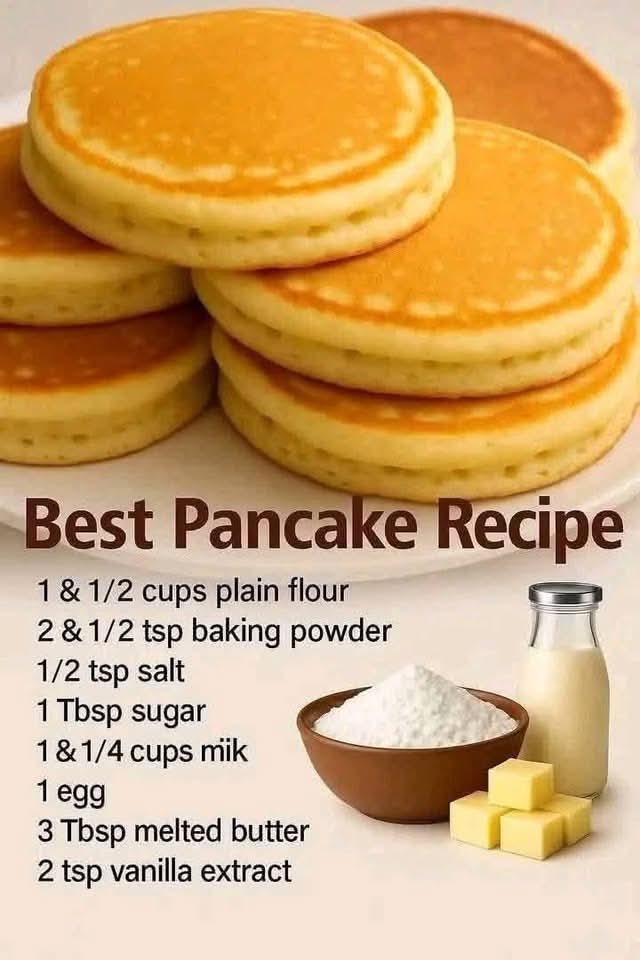
The beauty of this pancake recipe lies in its balance—each ingredient plays a vital role in achieving that signature fluff and golden hue. Below is the precise quantity breakdown for a batch that yields approximately 8–10 medium pancakes, perfect for a small gathering or a cozy family breakfast.
- 1 ½ cups all-purpose flour: Provides structure and body to the pancakes, ensuring they hold their shape while remaining tender.
- 2 ½ teaspoons baking powder: The leavening agent responsible for the rise and airy texture. It reacts with moisture and heat to create bubbles.
- ½ teaspoon salt: Enhances flavor and balances the sweetness, making each bite more satisfying.
- 1 tablespoon sugar: Adds a touch of sweetness and helps with browning, giving the pancakes their golden crust.
- 1 ¼ cups milk: Hydrates the flour and activates the baking powder. Whole milk adds richness, but any milk works.
- 1 large egg: Binds the ingredients and contributes to the structure and richness of the batter.
- 3 tablespoons melted butter (or oil): Adds moisture and flavor, while preventing the pancakes from sticking to the pan.
- 2 teaspoons vanilla extract: Infuses the batter with a warm, aromatic sweetness that elevates the overall flavor profile.
These quantities are optimized for consistency and flavor. Doubling the recipe is easy and ideal for larger groups—just maintain the ratios and enjoy the same fluffy results.
🍫 Optional Additions
While the base recipe is delightful on its own, optional additions can transform your pancakes into personalized creations. These mix-ins and toppings allow for playful experimentation, seasonal flair, and added nutritional value without compromising the core texture.
- Chocolate chips: Stir in ½ cup of semi-sweet or dark chocolate chips for a decadent twist. They melt into gooey pockets of joy with every bite.
- Blueberries: Fresh or frozen blueberries add bursts of tartness and color. Use ½ cup and fold gently into the batter to avoid streaking.
- Mashed banana: For a natural sweetness and extra moisture, add ½ a ripe banana to the wet ingredients. This also boosts potassium and fiber.
- Cinnamon or nutmeg: A pinch of warm spices adds depth and coziness, especially in colder months or holiday mornings.
- Lemon zest: Brightens the flavor and pairs beautifully with berries or ricotta. Use about 1 teaspoon for a subtle citrus lift.
These additions can be mixed directly into the batter or sprinkled on top before flipping. They invite creativity and help tailor the pancakes to your mood, occasion, or dietary preferences.