
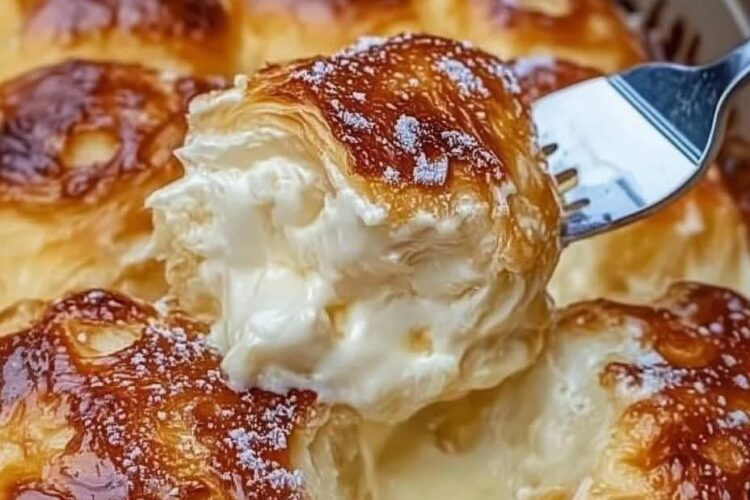
Ultimate Creamy Cheese–Filled Puff Pastry Bake: A Golden, Pull-Apart Comfort Dish for Every Occasion
Few dishes capture the universal appeal of comfort food quite like a cheese-filled puff pastry bake. With its golden, flaky layers and rich, molten cheese center, this dish brings together simplicity and indulgence in a way that feels both rustic and elegant. Whether served as a cozy family dinner, a holiday side dish, or a crowd-pleasing centerpiece for gatherings, this recipe delivers dramatic presentation with surprisingly little effort. The contrast between crisp, buttery pastry and soft, creamy cheese creates a sensory experience that is deeply satisfying, making it one of those dishes people remember long after the table is cleared.
This recipe is designed to be approachable for home cooks of all skill levels while offering enough depth and technique to satisfy experienced bakers. Puff pastry acts as the foundation, providing structure and flakiness without the labor of making laminated dough from scratch. The filling focuses on a blend of cheeses chosen for meltability, flavor balance, and richness. When baked together, the result is a pull-apart pastry dish that stretches and oozes with every forkful, offering the kind of comfort usually reserved for classic baked pasta dishes or cheese breads, yet with a refined, bakery-style finish.
What makes this recipe particularly suitable for a website feature is its versatility. It can be adapted to different cheeses, herbs, and even savory additions while remaining reliable and visually impressive. It also scales easily, making it ideal for both small households and larger gatherings. Throughout this article, you will find detailed explanations, preparation tips, storage advice, serving ideas, and variations, all written to help readers succeed the first time and encourage them to make the recipe their own.
Ingredients Overview and Selection
The success of a cheese-filled puff pastry bake relies heavily on ingredient quality. Because the recipe uses relatively few components, each one plays an important role in flavor and texture.
Puff pastry should be all-butter if possible, as butter-based pastry delivers superior flavor and flakiness. Frozen puff pastry sheets are widely available and work exceptionally well when properly thawed. It is important to allow the pastry to thaw in the refrigerator rather than at room temperature to maintain its structure and prevent premature softening.
Cheese selection is the heart of this recipe. A combination of cheeses yields the best results. Mozzarella provides stretch and mild creaminess, while cream cheese adds richness and a smooth, custard-like interior. For added depth, cheeses such as provolone, fontina, or mild cheddar can be included. The goal is to create a filling that melts evenly without releasing excess oil or becoming grainy.
Eggs are used primarily for the egg wash, which gives the pastry its glossy, golden finish. Milk or cream may be incorporated into the filling to enhance creaminess and help bind the cheeses together. Salt should be used sparingly, as cheese naturally contains sodium, while freshly ground black pepper adds subtle warmth.
Optional ingredients such as garlic powder, dried herbs, or finely chopped fresh herbs can be added to the filling to elevate the flavor without overpowering the cheese. Butter, brushed on the baking dish or lightly on the pastry, contributes additional richness and prevents sticking.
Preparing the Puff Pastry
Proper handling of puff pastry is essential for achieving distinct layers and an even rise. Once thawed, the pastry should remain cold until ready to assemble. Working on a lightly floured surface prevents sticking while preserving the pastry’s delicate structure.
The pastry sheets are typically rolled out slightly to smooth seams and ensure uniform thickness. Care should be taken not to over-roll, as this can compress the layers and reduce flakiness. Cutting the pastry into equal portions ensures even baking and consistent filling distribution.
When assembling a pull-apart style bake, the pastry pieces can be shaped into rolls, squares, or layered stacks depending on the desired presentation. Each piece should be filled generously but not excessively, as overfilling may cause leakage during baking.
Creating the Creamy Cheese Filling
The filling is prepared by combining softened cream cheese with shredded melting cheeses. Mixing by hand rather than using a mixer helps maintain texture and prevents the filling from becoming overly smooth. A small amount of milk or cream can be added to loosen the mixture, making it easier to spread or portion.
Seasonings are incorporated at this stage. Garlic powder, onion powder, or dried Italian herbs complement the cheese beautifully. Fresh herbs such as parsley or chives can be folded in for brightness and visual appeal. The filling should taste well-balanced and slightly under-seasoned, as flavors intensify during baking.
Allowing the filling to rest briefly at room temperature helps it spread more evenly and ensures consistent melting during baking.
Assembly Techniques
Assembly is where this recipe truly shines in its adaptability. For a pull-apart bake, each pastry piece is filled and arranged snugly in a buttered baking dish. Placing the pieces close together encourages them to rise upward rather than outward, creating a tall, layered appearance with soft, tender sides.
An egg wash made from beaten egg and a splash of milk is brushed over the exposed pastry surfaces. This step is essential for achieving a deep golden color and a professional finish. A light sprinkle of grated cheese or herbs on top adds visual interest and enhances flavor.
The assembled dish should be chilled briefly before baking. This step helps the pastry maintain its shape and promotes better puff during baking.
Baking for Perfect Results
Baking temperature plays a critical role in puff pastry recipes. A moderately hot oven allows the butter layers to release steam quickly, causing the pastry to rise and separate into distinct flakes. Baking too low may result in dense or greasy pastry, while baking too high can cause excessive browning before the interior is fully heated.
The dish should be baked until the pastry is deeply golden and the cheese filling is visibly bubbling. Depending on oven performance and dish size, baking time may vary slightly. Rotating the dish halfway through baking ensures even browning.
Once baked, the dish should rest briefly before serving. This allows the cheese to settle slightly while remaining soft and creamy, making serving easier and preventing burns from molten filling.
Serving Suggestions
This cheese-filled puff pastry bake is best served warm, when the contrast between crisp pastry and creamy interior is most pronounced. It pairs beautifully with simple accompaniments that balance its richness. A fresh green salad with a light vinaigrette provides acidity and crunch, while roasted vegetables add color and depth.
As a main dish, it can be served alongside soup or a vegetable-based side. As an appetizer or brunch item, it stands well on its own, sliced or pulled apart at the table for a communal dining experience.
Leftovers reheat well in the oven, where the pastry can regain some crispness. Microwaving is possible but may soften the pastry more than desired.
Storage and Make-Ahead Tips
One of the advantages of this recipe is its flexibility for advance preparation. The assembled, unbaked dish can be covered tightly and refrigerated for several hours before baking. This makes it ideal for entertaining, allowing hosts to focus on guests rather than last-minute preparation.
Baked leftovers should be stored in an airtight container in the refrigerator and consumed within two to three days for best quality. Reheating in a moderate oven helps restore texture and flavor.
Freezing is possible, though best done before baking. The assembled dish can be frozen solid, wrapped securely, and baked directly from frozen with a slightly longer baking time.
Variations and Flavor Adaptations
While the classic cheese version is universally appealing, this recipe welcomes creative variations. Adding cooked spinach, sautéed mushrooms, or caramelized onions to the filling introduces savory depth. Incorporating cooked bacon or ham transforms the dish into a heartier meal.
For a sharper flavor profile, cheeses such as blue cheese or aged cheddar can be added in small amounts. For a milder, more delicate version, ricotta or mascarpone can be incorporated into the filling.
Herb-focused variations using fresh thyme, rosemary, or basil give the dish a more aromatic character. Spices such as paprika or chili flakes can add warmth without overwhelming the cheese.
Why This Recipe Works
The enduring appeal of this cheese-filled puff pastry bake lies in its balance of texture, flavor, and ease. Puff pastry provides instant structure and elegance, while the cheese filling delivers comfort and indulgence. The recipe’s adaptability allows it to suit different occasions, dietary preferences, and ingredient availability.
From a website perspective, this recipe offers strong visual appeal, broad audience interest, and excellent potential for engagement. It encourages readers to experiment, share variations, and return to the recipe again and again.
Ultimately, this dish represents the kind of cooking that brings people together. It is simple enough for everyday enjoyment yet special enough to serve on meaningful occasions. With its golden layers and creamy center, it embodies the idea that great food does not have to be complicated to be memorable.