
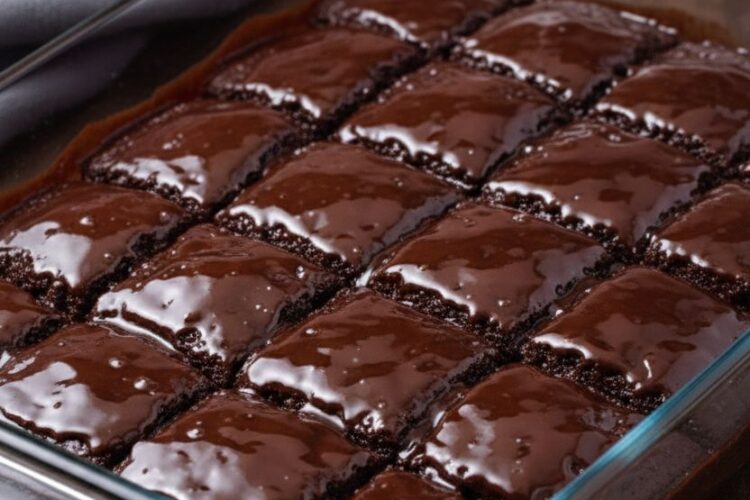
Ultimate Moist Chocolate Cake with Warm Cocoa Sauce
A truly moist chocolate cake is not just about ingredients; it is about technique, timing, and understanding how moisture works its way into every crumb. This recipe is designed for home bakers who want a foolproof, bakery-style chocolate cake that stays soft for days and delivers deep chocolate flavor without being heavy. What makes this cake special is the warm cocoa sauce that is poured over the cake while it is still hot, allowing it to soak in slowly and evenly. The result is a rich, tender cake with a glossy finish and an almost pudding-like interior near the top, while still holding its structure.
This long-form recipe is written to be website-ready, guiding readers step by step through the process, explaining the purpose behind each ingredient, and offering tips, variations, and troubleshooting advice. Whether you are baking for a family gathering, a casual dessert night, or simply to satisfy a chocolate craving, this cake delivers consistent, impressive results.
Why This Cake Is So Moist
Moisture in cake baking comes from a balance of fat, liquid, sugar, and proper mixing. In this recipe, vegetable oil plays a key role because it remains liquid at room temperature, unlike butter, which can firm up as the cake cools. Milk adds tenderness and helps dissolve the cocoa powder, while sugar not only sweetens the cake but also attracts and retains moisture.
The real secret, however, lies in the cocoa sauce. By pouring warm sauce over a freshly baked cake, the cake absorbs the liquid while its crumb is still open from the heat. This soaking method ensures the moisture penetrates deeply rather than sitting on the surface. The sauce also adds an extra layer of chocolate flavor, making the cake taste richer without requiring complicated techniques.
Ingredients Overview
Before starting, it is important to understand the role of each ingredient. Using room-temperature ingredients whenever possible will help everything combine smoothly and evenly.
For the Cake Batter
- Eggs: Provide structure and help emulsify the batter.
- Granulated sugar: Sweetens the cake and helps retain moisture.
- Vegetable oil: Adds lasting moisture and keeps the cake soft even after refrigeration.
- Milk: Adds tenderness and balances the cocoa flavor.
- Unsweetened cocoa powder: Provides deep chocolate flavor.
- Vanilla extract: Enhances the chocolate and adds warmth.
- All-purpose flour: Gives the cake structure.
- Baking powder: Helps the cake rise evenly.
For the Cocoa Sauce
- Unsweetened cocoa powder: Intensifies the chocolate flavor.
- Granulated sugar: Sweetens the sauce and helps it soak smoothly.
- Vegetable oil: Adds richness and shine.
- Milk: Thins the sauce and allows it to absorb into the cake.
Ingredient Measurements
Cake Batter
- 4 large eggs, at room temperature
- 1 1/2 cups granulated sugar
- 1 cup vegetable oil
- 1 cup milk
- 1/2 cup unsweetened cocoa powder
- 2 teaspoons vanilla extract
- 2 cups all-purpose flour
- 1 tablespoon baking powder
Cocoa Sauce
- 1/2 cup unsweetened cocoa powder
- 1 cup granulated sugar
- 1/2 cup vegetable oil
- 1 cup milk
Equipment You Will Need
- Large mixing bowl
- Whisk
- Rubber spatula or hand mixer
- Fine-mesh sieve
- Medium saucepan
- Measuring cups and spoons
- Baking pan (9×13-inch or similar)
- Toothpick or cake tester
Step-by-Step Preparation
1. Preparing the Cake Batter
Begin by preheating your oven to 170–180°C. Grease your baking pan generously with oil or butter and lightly dust with flour, or line it with parchment paper for easy removal.
In a large mixing bowl, crack the eggs and add the granulated sugar. Whisk vigorously for several minutes until the mixture becomes pale, slightly thickened, and frothy. This step incorporates air into the batter, which helps create a lighter texture.
Once the eggs and sugar are well combined, slowly pour in the vegetable oil while whisking continuously. Follow with the milk, mixing just until incorporated. At this stage, the batter will be very liquid, which is exactly what you want.
Using a fine-mesh sieve, sift the cocoa powder, flour, and baking powder directly into the bowl. Add the vanilla extract. Sifting prevents lumps and ensures even distribution of the dry ingredients.
Using a spatula or mixer on low speed, gently mix the batter until smooth. Avoid overmixing, as this can develop too much gluten and lead to a dense cake. Stop mixing as soon as no dry streaks remain.
2. Preparing the Cocoa Sauce
While the cake batter rests, prepare the cocoa sauce. In a medium saucepan, combine the cocoa powder, sugar, vegetable oil, and milk.
Place the saucepan over medium heat and stir constantly. The goal is to dissolve the sugar completely and create a smooth, glossy sauce. Do not allow the mixture to boil. Once the sugar has dissolved and the sauce is hot to the touch, remove it from the heat.
Carefully measure out 1 cup of the sauce and set it aside. This portion will be poured over the cake immediately after baking. The remaining sauce can be reserved for serving.
3. Baking the Cake
Pour the prepared cake batter into the greased baking pan, spreading it evenly with a spatula. Tap the pan gently on the counter to release any trapped air bubbles.
Place the pan in the preheated oven and bake for 30 to 35 minutes. Baking time may vary depending on your oven, so begin checking at the 30-minute mark.
Insert a toothpick into the center of the cake. If it comes out mostly clean with a few moist crumbs, the cake is ready. Avoid overbaking, as this can dry out the cake before the sauce is added.
Remove the cake from the oven and place it on a heat-safe surface.
4. Soaking the Cake
Allow the cake to rest for 2 to 3 minutes after removing it from the oven. This brief rest helps the cake settle while remaining hot enough to absorb the sauce effectively.
Using a spoon or measuring cup, slowly pour the reserved 1 cup of warm cocoa sauce over the surface of the cake. Pour evenly, allowing the sauce to soak in gradually. You may notice the cake bubbling slightly as it absorbs the liquid.
Let the cake cool at room temperature. As it cools, the sauce will continue to sink into the cake, creating an incredibly moist texture.
Serving Suggestions
This cake can be served warm or at room temperature. For an extra indulgent dessert, drizzle individual slices with the remaining cocoa sauce just before serving.
Other serving ideas include:
- A dusting of powdered sugar
- A dollop of whipped cream
- Fresh berries for contrast
- A scoop of vanilla ice cream
Storage and Shelf Life
One of the advantages of this cake is how well it keeps. Thanks to the oil-based batter and the soaking sauce, the cake stays moist for several days.
- At room temperature: Store covered for up to 2 days.
- In the refrigerator: Store in an airtight container for up to 5 days.
- In the freezer: Wrap individual slices tightly and freeze for up to 2 months. Thaw at room temperature before serving.
Tips for Perfect Results
- Always measure ingredients accurately, especially flour and cocoa powder.
- Use unsweetened cocoa powder for the best chocolate flavor.
- Do not skip the soaking step; it is essential for achieving the signature moist texture.
- If the sauce thickens too much while standing, gently reheat it before serving.
Variations and Adaptations
This recipe is versatile and can be adapted to suit different tastes:
- Add chocolate chips to the batter for extra richness.
- Flavor the sauce with a splash of coffee to enhance the chocolate.
- Replace part of the milk with coconut milk for a subtle twist.
- Bake the batter as cupcakes and spoon the sauce over each one.
Common Mistakes to Avoid
- Overmixing the batter, which can result in a tough cake.
- Allowing the sauce to boil, which can cause it to thicken too much.
- Pouring the sauce over a completely cooled cake, which prevents proper absorption.
Final Thoughts
This moist chocolate cake with warm cocoa sauce is a reliable, crowd-pleasing dessert that delivers maximum flavor with simple ingredients and straightforward steps. By understanding the purpose behind each stage of the process, even beginner bakers can achieve bakery-quality results at home.
Whether served on its own or dressed up with toppings, this cake is proof that a truly moist dessert does not require complicated techniques, only attention to detail and good timing. Once you try this method, it is likely to become a staple recipe in your kitchen, perfect for any occasion where comfort and chocolate are welcome.