
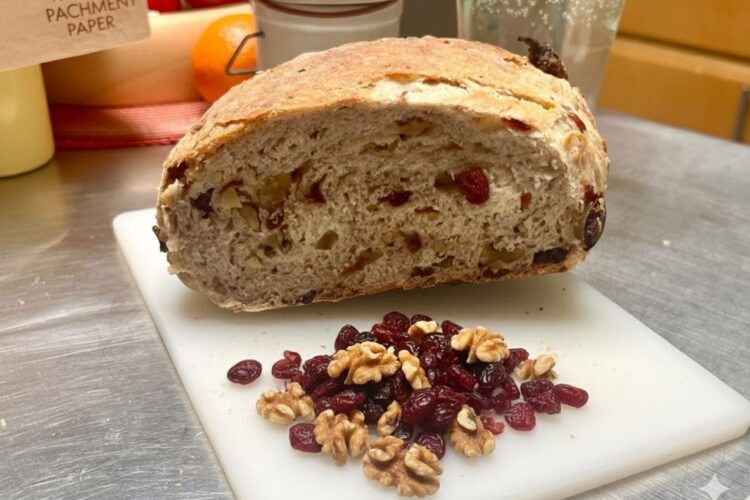
Cranberry Walnut Artisan Bread
A Rustic No-Knead Loaf with a Crunchy Crust and Soft, Airy Crumb
Few things in home baking are as rewarding as pulling a beautifully browned artisan loaf from the oven. This cranberry walnut artisan bread is the kind of bread that stops people mid-conversation, draws them into the kitchen, and convinces them that homemade bread is not only possible but worth every minute of patience it requires. With its deeply golden crust, soft open crumb, bursts of tart dried cranberries, and the earthy crunch of toasted walnuts, this loaf is a true celebration of simple ingredients transformed by time.
This is a no-knead bread, meaning the dough relies on hydration and fermentation rather than physical effort to develop flavor and structure. There is no mixer, no kneading, and no complicated shaping. Time does the heavy lifting. The result is a bakery-style loaf that looks impressive, tastes complex, and feels deeply comforting.
Whether served warm with butter, sliced thin for sandwiches, toasted for breakfast, or paired with cheese and soup, this cranberry walnut bread fits effortlessly into both everyday meals and special occasions.
Why Cranberry and Walnut Is a Classic Combination
Cranberries and walnuts have long been paired together in baking for good reason. The tartness of dried cranberries balances the richness of bread dough, while walnuts add texture, depth, and a subtle bitterness that prevents the loaf from becoming overly sweet. When baked inside an artisan loaf, these inclusions become part of the bread’s structure rather than distractions.
As the bread bakes, the cranberries soften and slightly caramelize, releasing small pockets of tangy sweetness throughout the crumb. The walnuts toast gently inside the dough, enhancing their flavor and adding crunch without overwhelming the softness of the bread itself.
This balance makes the loaf incredibly versatile. It works just as well alongside savory meals as it does with sweet toppings like honey or jam.
What Makes This Bread Truly Artisan
Artisan bread is not defined by fancy ingredients or advanced techniques. It is defined by simplicity, patience, and attention to process. This recipe checks all those boxes.
The dough is high in hydration, which helps create an open, airy crumb. The long fermentation allows yeast to work slowly, developing flavor and structure naturally. Baking the loaf in a preheated Dutch oven traps steam during the first phase of baking, allowing the bread to rise fully before the crust sets. This creates that signature crackly crust and dramatic oven spring.
Despite its rustic appearance, this bread is surprisingly forgiving and beginner-friendly.
Ingredients and Their Role
Flour
Bread flour is ideal for this recipe because its higher protein content helps build structure and chew. However, all-purpose flour works well too, producing a slightly softer crumb. The choice depends on personal preference and what you have on hand.
Water
Warm water hydrates the flour and activates the yeast. The water should feel warm to the touch but not hot, as excessive heat can damage the yeast.
Yeast
Instant yeast is convenient and reliable. It distributes evenly through the flour and does not need to be activated separately. The small amount used here is intentional, allowing for a slower rise and better flavor.
Salt
Salt is essential not only for flavor but also for controlling fermentation. It strengthens the gluten structure and ensures the dough rises evenly rather than collapsing.
Dried Cranberries
Dried cranberries provide bursts of tartness throughout the loaf. They should be roughly chopped if very large to ensure even distribution.
Walnuts
Walnuts add texture and richness. Chopping them coarsely ensures they remain noticeable without tearing the dough structure.
Honey (Optional)
A small amount of honey adds subtle sweetness and enhances browning. It is optional and can be omitted without affecting the structure of the bread.
Ingredients List
- 3 cups bread flour or all-purpose flour
- 1 ½ cups warm water
- 1 teaspoon instant yeast
- 1 ½ teaspoons salt
- ½ cup chopped walnuts
- ½ cup dried cranberries or raisins
- 1 tablespoon honey (optional)
Step-by-Step Instructions
Mixing the Dough
In a large mixing bowl, combine the flour, salt, and instant yeast. Whisk thoroughly to distribute the yeast evenly. Add the chopped walnuts and dried cranberries and stir so they are well dispersed throughout the flour.
Pour in the warm water and honey if using. Using a wooden spoon or spatula, stir until a shaggy, sticky dough forms. There should be no visible dry flour. The dough will look rough and uneven, which is exactly what you want.
First Rise
Cover the bowl tightly with plastic wrap or a damp kitchen towel. Place it in a warm, draft-free area and let it rise for about two hours, or until doubled in size. The surface should look bubbly and slightly domed.
This rise is where flavor development begins. The dough is alive and active, slowly building structure without kneading.
Shaping the Dough
Lightly flour a work surface. Turn the dough out gently, being careful not to deflate it too much. With floured hands, fold the dough over itself a few times to create surface tension. Shape it into a loose round.
Place the dough seam-side down on a piece of parchment paper. Cover and let it rest for another 30 minutes. This short rest helps the dough relax and improves oven spring.
Preheating the Oven
Place a Dutch oven or heavy oven-safe pot with a lid inside the oven. Preheat to 230°C (450°F). This step is crucial. The pot must be extremely hot to create steam when the dough is added.
Baking the Bread
Carefully remove the hot pot from the oven. Lift the dough using the parchment paper and lower it into the pot. Cover with the lid and return it to the oven.
Bake covered for 30 minutes. This traps steam and allows the loaf to rise fully.
Remove the lid and bake for an additional 10 to 15 minutes, until the crust is deep golden brown and sounds hollow when tapped.
Cooling
Transfer the bread to a wire rack and let it cool completely for at least one hour before slicing. Cutting too soon can result in a gummy interior.
Scoring for a Professional Finish
Right before baking, use a sharp knife or razor blade to score a shallow slit or cross on the surface of the dough. This allows controlled expansion and gives the loaf its signature artisan look.
Serving Suggestions
This bread shines in many settings:
- Toasted with butter or honey
- Served with cheese boards
- Paired with soups and stews
- Used for sandwiches
- Served alongside salads
Its slightly sweet, nutty profile makes it incredibly versatile.
Storage and Shelf Life
Store the bread at room temperature in a paper bag or wrapped in a clean kitchen towel for up to two days. For longer storage, slice and freeze. Toast directly from frozen as needed.
Variations and Customizations
- Swap walnuts for pecans or almonds
- Use raisins or chopped dates instead of cranberries
- Add orange zest for a festive flavor
- Replace honey with maple syrup
- Add seeds such as sunflower or flax
Why This Recipe Works Every Time
This recipe succeeds because it respects the fundamentals of bread baking. It uses time instead of force, steam instead of additives, and simple ingredients instead of shortcuts. The result is a loaf that feels handmade, rustic, and deeply satisfying.
Once you bake this cranberry walnut artisan bread, it becomes the kind of recipe you return to again and again. It is dependable, impressive, and endlessly adaptable.