
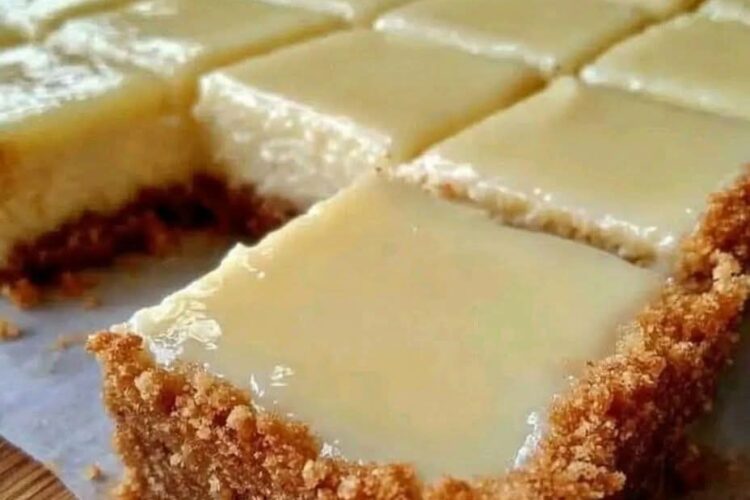
Creamy Lemon Squares are a delightful dessert that perfectly balances rich creaminess with bright, tangy lemon flavor. This treat features a buttery graham cracker crust topped with a smooth, custard-like lemon filling made extra luscious thanks to sweetened condensed milk. The result is a melt-in-your-mouth square that offers refreshing tartness in every bite, making it an ideal choice for spring gatherings, summer picnics, or simply as a light yet indulgent after-dinner sweet. Unlike traditional shortbread-based lemon bars, this version uses graham crackers for a slightly different texture and pairs the classic lemon curd elements with the creamy richness of condensed milk, creating a no-fuss yet impressive bar that feels both nostalgic and modern.
What makes Creamy Lemon Squares so appealing is their simplicity combined with bold flavor contrast. The crust provides a sturdy, subtly sweet base that crumbles just right, while the filling sets into a velvety layer that is tangy enough to cut through any sweetness overload. These squares are often dusted with powdered sugar for an elegant finish, and they chill beautifully in the refrigerator, allowing the flavors to meld and the texture to firm up perfectly. Whether served at room temperature for a softer bite or straight from the fridge for maximum refreshment, they deliver consistent satisfaction.
Introduction
The world of lemon desserts is vast and varied, but few capture the essence of sunny indulgence quite like Creamy Lemon Squares. This recipe stands out for its effortless preparation and remarkable taste payoff, requiring only a handful of pantry staples and fresh lemons to produce something truly special. Originating from the broader family of lemon bars, this creamy variation leans into the convenience of sweetened condensed milk, which eliminates the need for extensive cooking of a traditional curd while still delivering that signature puckering tartness. Home bakers love it because it comes together quickly, bakes in stages without complicated techniques, and yields squares that look bakery-worthy with minimal effort. The contrast between the crisp-yet-tender crust and the silky filling creates a multi-textural experience that keeps people coming back for more.
In many households, these squares become a go-to for potlucks, holidays, or casual family treats because they transport well, slice neatly, and appeal to both kids and adults. The bright yellow hue evokes feelings of warmth and cheer, making them a visual as well as flavorful highlight on any dessert table. As seasons change and fresh citrus becomes abundant, turning to recipes like this one feels natural, offering a burst of brightness when days are long and appetites seek something lighter yet satisfying.
Origin and Cultural Significance
Lemon bars, including their creamy square variations, have a relatively modern history despite the ancient use of lemons in cuisine. Lemons themselves trace back thousands of years, originating in regions like India and the Middle East before spreading through trade routes to Europe during the Renaissance. During this period, lemon custards and curd-like preparations became popular in England and beyond, often combined with sugar to balance their natural acidity in pies, tarts, and cheesecakes. Shortbread, a key component in many classic lemon bars, emerged in Scotland as early as the 12th century, evolving into the buttery, crumbly base we recognize today.
However, the layered bar form we know as lemon bars or squares did not appear until the 20th century. The first widely published recipe surfaced in the Chicago Daily Tribune on August 27, 1962, submitted by a home cook named Eleanor Mickelson. This marked the debut of the now-iconic combination of shortbread crust and lemon curd filling baked together. Soon after, Betty Crocker’s Cooky Book in 1963 helped popularize it nationwide, turning lemon bars into a staple of American home baking. The graham cracker crust version, as in this creamy recipe, represents a creative American adaptation, drawing from cheesecake influences and the convenience of canned condensed milk, which became widely available in the mid-20th century.
Culturally, lemon squares hold significance as an emblem of mid-century American dessert culture, often appearing at bake sales, church suppers, bridal showers, and family reunions. They embody the era’s love for bar cookies—easy to make in large batches, portable, and shareable. In the United States, they are associated with spring and summer, their tangy profile cutting through heavier dishes at picnics or barbecues. While not tied to a specific ethnic tradition, they reflect broader Western dessert trends where citrus brightens rich elements, similar to key lime pie in the South or lemon posset in Britain. Today, they continue to evolve, with home cooks experimenting with additions like zest or berries, keeping them relevant in contemporary baking while honoring their straightforward, joyful roots.
Ingredients Quantity
Creating the perfect batch of Creamy Lemon Squares starts with precise measurements to ensure the right balance of texture and flavor. For the crust, you will need 4 tablespoons of butter, melted and cooled, with a little extra set aside for greasing the pan to prevent sticking. Combine this with 1 ½ cups of graham cracker crumbs, which provide that classic crunchy foundation, and ¼ cup of granulated sugar to add subtle sweetness and help bind everything together.
The lemon filling calls for 2 large egg yolks, which contribute to the creamy richness without making the bars overly eggy. One full can (14 ounces) of sweetened condensed milk serves as the star ingredient, delivering both sweetness and that signature velvety consistency. Finally, include ½ cup of fresh lemon juice, freshly squeezed from about 3 medium lemons, to deliver authentic tartness that cuts through the condensed milk’s richness. Using fresh juice is essential here, as bottled varieties often lack the vibrant acidity needed for the best results.
These quantities are scaled for a standard square baking pan, typically 8×8 or 9×9 inches, yielding about 9 to 16 squares depending on how generously you slice them. The simplicity of the list makes this recipe accessible even for beginners, while the quality of ingredients directly impacts the final taste and texture.
Optional Additions
While the core recipe shines in its simplicity, there are plenty of ways to customize Creamy Lemon Squares for different preferences or occasions. Adding the zest of 1 to 2 lemons to the filling intensifies the citrus aroma and flavor without increasing tartness, giving the bars a more pronounced lemon profile that many find irresistible. A teaspoon of vanilla extract stirred into the filling can round out the sweetness with a subtle warmth.
For texture contrast, consider incorporating a handful of poppy seeds into the crust mixture before pressing it down—this adds a gentle crunch and visual speckles without overpowering the lemon. If you enjoy fruit pairings, fresh blueberries or raspberries pressed lightly into the top of the filling before baking create beautiful pockets of jammy sweetness that complement the tang. A thin layer of whipped cream or a dollop of mascarpone on top after chilling turns these into an elegant plated dessert.
Other creative twists include swapping half the lemon juice for lime juice to evoke key lime pie vibes, or adding a pinch of salt to the filling to enhance the flavors. For a coconut lover’s version, mix shredded coconut into the crust or sprinkle toasted coconut over the finished bars. These additions keep the recipe versatile while staying true to its creamy, lemon-forward essence.
Tips for Success
Achieving bakery-quality Creamy Lemon Squares relies on a few key techniques and mindful steps. Always use fresh lemons for the juice, as the bright, zesty flavor far surpasses anything from concentrate—squeeze them yourself and strain out pulp if desired for smoother filling. When preparing the crust, press it firmly and evenly into the pan using the bottom of a measuring cup or glass to create a compact base that holds together well after baking.
Preheat the oven fully to 350°F (175°C) and bake the crust until lightly golden, usually 10 to 12 minutes, to ensure it sets properly without burning. Pour the filling over the warm crust immediately after the first bake—this helps the layers bond seamlessly and prevents sogginess. Avoid overbaking the filling; it should be just set with a slight jiggle in the center, as it will firm up further during cooling and chilling.
Line the pan with parchment paper overhanging the sides for easy removal and clean slicing. Chill the bars for at least 4 hours, preferably overnight, to allow the filling to fully set and flavors to develop. For neat cuts, wipe the knife between slices and dust generously with powdered sugar just before serving to avoid it absorbing into the bars. Following these pointers ensures consistent, crowd-pleasing results every time.
Instructions
1️⃣ Begin by prepping the pan thoroughly. Preheat your oven to 350°F (175°C) and lightly grease an 8×8 or 9×9 inch square baking pan with butter. For easier removal, line the pan with parchment paper, leaving overhang on two sides to act as handles later.
2️⃣ Make the crust by combining 1 ½ cups graham cracker crumbs, ¼ cup sugar, and 4 tablespoons melted and cooled butter in a medium bowl. Stir until the mixture resembles wet sand and holds together when pressed. Transfer to the prepared pan and press firmly and evenly across the bottom using your hands or the back of a measuring cup.
3️⃣ Bake the base for 10 to 12 minutes, or until lightly golden and set. The edges may pull slightly away from the pan sides, indicating it’s ready. Remove from the oven but keep the temperature at 350°F.
4️⃣ While the crust bakes, prepare the lemon filling. In a separate bowl, whisk 2 large egg yolks until smooth. Add the entire 14-ounce can of sweetened condensed milk and whisk vigorously to combine. Gradually pour in ½ cup fresh lemon juice, whisking continuously until the mixture is creamy, smooth, and slightly thickened.
5️⃣ Pour the lemon filling over the warm crust, using a spatula to spread it evenly to the edges for uniform baking.
6️⃣ Return the pan to the oven and bake for an additional 15 to 20 minutes, or until the filling is just set around the edges with a gentle jiggle in the center. It will continue to firm as it cools.
7️⃣ Let the pan cool completely on a wire rack at room temperature, then cover and refrigerate for at least 4 hours or overnight until fully chilled and firm. Once set, lift out using the parchment overhang, slice into squares, and dust with powdered sugar if desired. Enjoy the creamy, tangy perfection!
Description
These Creamy Lemon Squares boast a harmonious blend of textures and flavors that make them irresistible. The crust delivers a buttery, graham-forward crunch with just enough sweetness to complement rather than compete with the topping. Above it sits a luxurious lemon layer, pale yellow and velvety smooth, thanks to the magic of sweetened condensed milk merging with egg yolks and fresh juice. Each bite starts with the satisfying snap of crust, then gives way to silky filling that bursts with bright citrus tang balanced by milky richness.
The overall effect is refreshing yet comforting—tart enough to wake up the palate, sweet enough to satisfy a dessert craving. When chilled, the filling takes on an almost ice-cream-like creaminess, while room-temperature servings feel softer and more pudding-like. A light dusting of powdered sugar adds visual elegance and a subtle extra sweetness on the surface. Visually, the bars present clean lines and sunny color, perfect for stacking on a platter or arranging on individual plates.
Nutritional Information
Creamy Lemon Squares provide a classic indulgent treat, with nutritional values varying slightly based on exact pan size, slice portions, and any additions. For a standard 8×8 pan yielding 9 larger squares, each serving approximates 280 to 350 calories, primarily from the butter, sugar, and condensed milk. Fat content typically ranges from 12 to 18 grams per square, with saturated fat around 7 to 10 grams due to the butter and dairy components.
Carbohydrates hover between 35 and 45 grams, including 25 to 35 grams of sugars from the condensed milk, granulated sugar, and graham crackers. Protein is modest at 4 to 6 grams per serving, contributed by the egg yolks and milk solids. Cholesterol comes in around 60 to 80 mg, mostly from the yolks, while sodium is low to moderate at 150 to 250 mg depending on the graham crackers used.
These bars offer minimal fiber (1 to 2 grams) and no significant vitamins beyond small amounts of vitamin C from the lemon juice. As a dessert, they fit best as an occasional treat, but the fresh lemon provides antioxidants and a refreshing element. For lighter versions, consider low-fat condensed milk or reducing sugar slightly, though this may affect texture.
Conclusion
Creamy Lemon Squares represent the best of simple baking—few ingredients, straightforward steps, and outstanding results that impress without complexity. From their mid-20th-century American origins to their enduring place on dessert tables today, they capture the joy of balancing tart and sweet in a portable, shareable form. This recipe honors tradition while offering creamy indulgence that feels both familiar and special.
Recommendation
I highly recommend these Creamy Lemon Squares for any occasion calling for a bright, crowd-pleasing dessert. Serve them at brunches, picnics, or family dinners, and watch them disappear quickly. Pair with coffee, tea, or fresh berries for contrast. They store well in the refrigerator for up to 5 days, making them ideal for advance preparation.
Embracing Healthful Indulgence
In a world of overly complicated desserts, Creamy Lemon Squares remind us that true enjoyment often comes from simplicity and quality ingredients. The fresh lemons bring natural brightness and a touch of vitamin C, while moderation allows this treat to fit into a balanced lifestyle. Embrace these squares as a moment of healthful indulgence—savor the tang, appreciate the creaminess, and let them brighten your day without guilt. After all, a little sweetness paired with vibrant citrus is one of life’s simple pleasures worth celebrating.